From Ankara’s Heart: How the Turkish Angora Became a Global Icon
The Turkish Angora, a breed of cat with origins tracing back to the heart of Ankara, Turkey, has captivated the world with its elegance and grace. This breed has not only become a symbol of Turkish culture but has also earned a distinguished place in the global feline community. Its journey from a regal presence in its homeland to an international icon is marked by a rich history, unique physical traits, and significant contributions to the world of cat breeding.
The Historical Roots of the Turkish Angora
The Turkish Angora’s story begins in the ancient city of Ankara, formerly known as Angora, located in central Turkey. The breed has been associated with this region for centuries, with historical records indicating its presence dating back to the Ottoman Empire. The Turkish Angora was not merely a household pet; it held a special place in the royal courts, often being kept by sultans and nobility. This regal status endowed the breed with a certain mystique, elevating it above ordinary cats. In Turkish culture, the Turkish Angora is seen as a symbol of beauty and grace, embodying the elegance of the nation’s heritage.
The breed’s connection to royalty and nobility is reflected in its name, which pays homage to its birthplace. The city of Ankara, once known as Angora, has long been celebrated for its unique natural resources, including the famous Angora wool, produced from the soft fur of Angora rabbits. The Turkish Angora, with its silky, flowing coat, shares a similar legacy, becoming a cherished emblem of Ankara’s rich tapestry of history and tradition.
Distinguishing Physical Traits
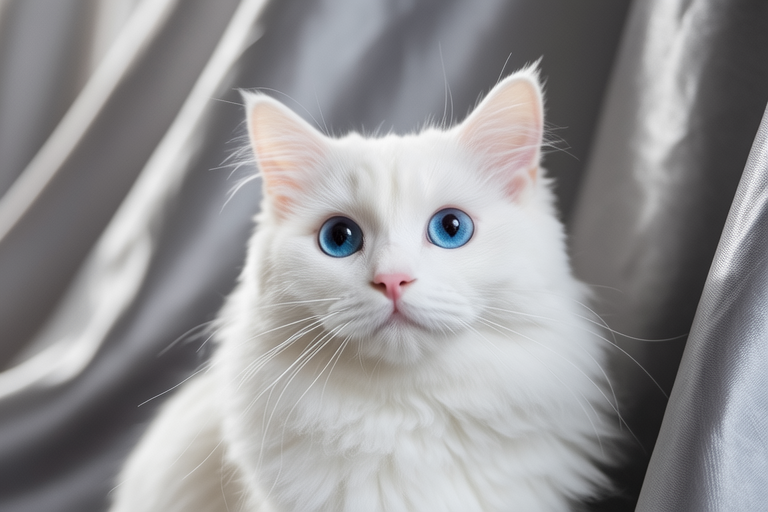
One of the most striking features of the Turkish Angora is its luxurious, silky white coat. This coat, often compared to the texture of cashmere, is one of the breed’s defining characteristics. The Turkish Angora’s fur is not only beautiful but also highly functional, providing protection against the harsh Anatolian climate. The breed’s coat can vary in length, ranging from short to semi-longhaired, though the medium-length coat is most common. This coat is often adorned with a ruff around the neck, adding to the cat’s majestic appearance.
Beyond its coat, the Turkish Angora is renowned for its striking blue eyes, which are a result of a genetic mutation causing heterochromia. While blue-eyed Turkish Angoras are the most iconic, the breed can also exhibit amber or green eyes, depending on the genetic combination. The combination of a silky white coat and piercing blue eyes creates a visually stunning effect, contributing significantly to the breed’s allure. These physical traits have made the Turkish Angora a favorite subject for artists and photographers, further enhancing its reputation as a breed of exceptional beauty.
Journey to International Recognition
The Turkish Angora’s rise to international prominence can be attributed to several key factors, including the efforts of dedicated breeders and notable individuals who played pivotal roles in popularizing the breed. One such individual was Helen Smith, a Swiss breeder who played a crucial role in establishing the breed outside of Turkey. In the 1960s, Smith began importing Turkish Angoras into Switzerland, where she established a breeding program aimed at preserving the breed’s unique characteristics.
Smith’s dedication to the breed helped establish the Turkish Angora in Europe, and subsequently, in North America. Her efforts laid the foundation for the breed’s acceptance into major cat registries, including the Cat Fanciers’ Association (CFA) in the United States. The CFA recognized the Turkish Angora in 1973, marking a significant milestone in the breed’s international journey. This recognition paved the way for the breed to participate in cat shows and competitions, further increasing its visibility and appeal among cat enthusiasts.
The Turkish Angora’s journey to international recognition was also facilitated by its association with the Ankara Zoo, which has maintained a breeding program since the 1920s. The zoo’s commitment to preserving the breed’s integrity has been instrumental in maintaining the breed’s distinct characteristics. The zoo’s efforts have not only ensured the survival of the Turkish Angora but have also contributed to its reputation as a breed of exceptional purity and quality.
Contributions to Breeding Programs
The Turkish Angora’s unique genetic makeup has made it a valuable asset in various breeding programs. Due to its long, silky coat and striking blue eyes, the breed has been used to enhance the appearance of other cat breeds. For instance, the Turkish Angora has been crossed with the Persian breed to create the Oriental Shorthair, a breed known for its elegant lines and expressive eyes. This crossbreeding has resulted in a diverse range of coat colors and patterns, enriching the gene pool of both the Turkish Angora and the Oriental Shorthair.
The Turkish Angora’s genetic contributions extend beyond coat and eye color. The breed’s slender, graceful body and high intelligence have also been valued in breeding programs aimed at developing new cat breeds. The Turkish Angora’s influence can be seen in the development of breeds such as the Balinese and the Javanese, both of which share the Turkish Angora’s elegant physique and intelligent demeanor. These genetic contributions highlight the breed’s versatility and adaptability, making it a cornerstone in the world of cat breeding.
Enduring Popularity and Legacy
Today, the Turkish Angora continues to enjoy enduring popularity among cat enthusiasts worldwide. Its combination of beauty, intelligence, and affectionate nature makes it a beloved companion in many households. The breed’s elegant appearance and gentle temperament have earned it a loyal following, ensuring its place in the hearts of cat lovers everywhere.
The Turkish Angora’s legacy extends beyond its role as a cherished pet. It serves as a symbol of cultural heritage, representing the rich history and traditions of Ankara and Turkey. The breed’s journey from a local favorite to a global icon is a testament to its timeless appeal and the enduring fascination it holds for people across the globe. As the Turkish Angora continues to capture the hearts of cat enthusiasts, it remains a living testament to the power of beauty and grace, a true icon from the heart of Ankara.
