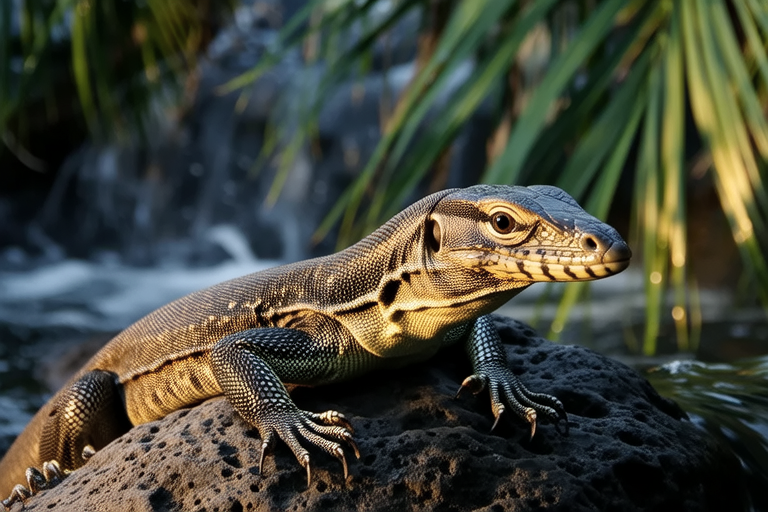
Top 10 Fascinating Facts About the Lethal but Majestic Water Monitor
The water monitor (Varanus salvator) is one of the largest lizards in the world, known for its impressive size, agility, and adaptability. This species has captured the imagination of many with its striking appearance and remarkable survival strategies. Below are ten fascinating facts that highlight the water monitor’s lethal prowess and majestic nature.
1. A Giant Among Lizards
The water monitor can grow up to 3 meters (9.8 feet) in length, making it one of the largest lizards globally. Its elongated body is supported by powerful limbs and a muscular tail that can be as long as its body. The tail is prehensile, enabling the lizard to grip branches and swim efficiently. Despite its intimidating size, the water monitor is incredibly light, weighing only about 20 kg (44 lbs). This combination of size and weight allows it to move swiftly on land and excel in aquatic environments.
2. Versatile Diet
Water monitors are opportunistic feeders, meaning they will eat almost anything they can catch. Their diet primarily consists of fish, crabs, small mammals, birds, reptiles, amphibians, and insects. They have been observed scavenging carcasses and consuming eggs and young hatchlings. The lizard’s sharp teeth and strong jaws allow it to crush hard-shelled prey like turtles and crabs. This diverse diet contributes to their role as apex predators in their ecosystems.
3. Stealthy Hunters
Water monitors are adept at hunting both on land and in water. On land, they rely on their keen eyesight and sense of smell to locate prey. They are known to ambush their targets, pouncing with surprising speed. In water, they use their flattened tails to propel themselves forward, swimming gracefully. Their ability to hold their breath for up to 30 minutes enables them to search for prey underwater. Once they spot a potential meal, they strike with lightning-fast precision.
4. Unique Adaptations
One of the most remarkable adaptations of the water monitor is its ability to close its nostrils and ears while diving. This helps prevent water from entering these sensitive areas. Additionally, their lungs are highly efficient, allowing them to extract oxygen even when partially submerged. Another interesting adaptation is the presence of dermal scales, which help regulate body temperature. These scales can expand or contract, altering the amount of heat absorbed from the environment.
5. Social Structure
Contrary to popular belief, water monitors are not solitary creatures. While they may appear independent, they exhibit social behaviors that include communal basking and occasional interactions. Males are particularly territorial during mating season, engaging in combat to secure mates. Females lay clutches of up to 40 eggs, usually burying them in sandy soil for incubation. Hatchlings are miniature versions of adults, born with the same hunting instincts.
6. Myths Versus Reality
Despite their reputation as dangerous animals, water monitors pose little threat to humans unless provoked. Many myths surround their aggression, including tales of them attacking boats and killing large mammals. However, there is no substantial evidence supporting these claims. Water monitors prefer to avoid confrontations with larger animals, including humans. Their primary concern is finding food and avoiding predators such as crocodiles and large snakes.
7. Ecological Role
As apex predators, water monitors play a crucial role in maintaining the balance of their ecosystems. By controlling populations of smaller animals, they prevent overgrazing and excessive predation on plant life. This indirectly supports the health of entire habitats, from forests to wetlands. Their scavenging behavior also aids in nutrient recycling, contributing to soil fertility.
8. Habitat Diversity
Water monitors are highly adaptable and can thrive in various environments, from dense tropical rainforests to mangrove swamps and freshwater rivers. Their ability to live near human settlements has led to conflicts, but it also demonstrates their resilience. They are often found in urban areas, where they feed on household waste and rodents. This adaptability has allowed them to expand their range across Southeast Asia and into parts of India and southern China.
9. Conservation Status
Despite their widespread distribution, water monitors face threats from habitat destruction, illegal wildlife trade, and hunting for meat and traditional medicine. Their skin is also valued for leather production, leading to unsustainable harvesting practices. Conservation efforts focus on protecting critical habitats and raising awareness about the importance of preserving these magnificent creatures. Several protected areas have been established to safeguard water monitor populations.
10. Captivating Behavior
Water monitors display intriguing behaviors that captivate observers. One such behavior is their ability to climb trees, using their claws and tails to support their weight. They often bask on branches to absorb sunlight, which helps regulate their body temperature. Another fascinating aspect of their behavior is their communication methods, which include hissing, tail flicking, and posturing. These signals serve multiple purposes, from warning off rivals to attracting mates.
In conclusion, the water monitor is a truly remarkable creature, combining lethal hunting skills with majestic grace. Its ability to thrive in diverse environments and adapt to changing conditions makes it an important part of many ecosystems. Understanding and appreciating this magnificent lizard can inspire greater efforts towards conservation and protection.
