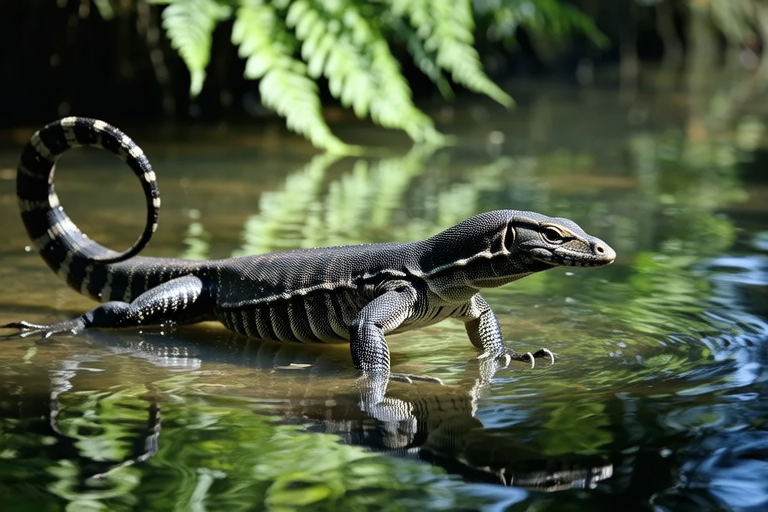
Aquatic Adventures: Discovering the Unique Behaviors of Water Monitors
In the vast and diverse world of reptiles, few creatures capture the imagination quite like the water monitor (Varanus salvator). These formidable lizards are renowned for their striking size, impressive speed, and remarkable adaptability. This article delves into the fascinating aquatic behaviors, habitats, dietary habits, and social interactions of water monitors, offering a comprehensive look at these extraordinary creatures.
Distinctive Aquatic Behaviors
Water monitors are adept swimmers, capable of diving deep and holding their breath for extended periods. Their streamlined bodies, powerful tails, and strong limbs make them well-suited for life in water. Scientific studies have shown that they can swim at speeds of up to 20 kilometers per hour, making them one of the fastest swimming lizards in the world.
One of the most intriguing aspects of water monitors’ aquatic behavior is their ability to detect prey underwater. They possess highly sensitive barbels around their snouts, which act as sensory organs, helping them locate fish, crustaceans, and other aquatic creatures. This adaptation allows them to hunt effectively even in murky waters.
Habitats and Adaptations
Water monitors inhabit a wide range of environments, from coastal mangroves and riverbanks to freshwater marshes and lakes. They are primarily found in Southeast Asia, where they thrive in the warm, humid climate. The species exhibits a high level of adaptability, which is crucial for their survival in such varied habitats.
These reptiles have several physiological adaptations that enable them to live both on land and in water. For instance, their nostrils can be closed when submerged, preventing water from entering their respiratory system. Additionally, their lungs are highly efficient, allowing them to store large amounts of oxygen during dives.
Dietary Habits
The diet of water monitors is as diverse as their habitat. They are opportunistic feeders, consuming a wide variety of prey items, including fish, frogs, birds, small mammals, and even eggs. Their powerful jaws and sharp teeth make them formidable predators, capable of taking down prey much larger than themselves.
While hunting on land, water monitors use their keen eyesight and sense of smell to locate prey. In the water, they rely more on their lateral line system, which detects vibrations in the water, aiding in the detection of potential food sources. This versatile feeding strategy ensures that water monitors can find sustenance in both aquatic and terrestrial environments.
Social Interactions
Despite their solitary nature, water monitors do exhibit some social behaviors. Males engage in ritualized combat during the breeding season, competing for access to females. These encounters often involve head-bobbing displays and physical altercations, with the winner gaining mating rights.
Females lay clutches of up to 40 eggs, usually in termite mounds or burrows. The eggs incubate for approximately six months before hatching. Interestingly, female water monitors have been observed guarding their nests, providing protection against predators. This behavior underscores the complexity of their social interactions and parental care.
Comparisons with Terrestrial Behaviors
While water monitors are equally at home on land, their terrestrial behaviors differ significantly from their aquatic counterparts. On land, they move with a sinuous gait, using their legs for propulsion and their tail for balance. Their agility and speed allow them to chase down prey and evade predators.
When threatened, water monitors can climb trees with remarkable dexterity. This climbing ability provides them with an additional layer of safety, enabling them to escape ground-based threats. However, their aquatic prowess often renders tree-climbing unnecessary, as they can simply dive into nearby water bodies for refuge.
Conservation Status and Challenges
Despite their widespread distribution, water monitors face numerous threats to their populations. Habitat destruction due to deforestation, urbanization, and agricultural expansion poses a significant challenge. Additionally, overharvesting for the pet trade and traditional medicine markets has led to declines in certain regions.
The International Union for Conservation of Nature (IUCN) lists the water monitor as “Least Concern” globally, but localized populations may be more vulnerable. Conservation efforts focus on protecting critical habitats, raising awareness, and regulating the trade of these animals. By addressing these challenges, we can help ensure the continued survival of this magnificent species.
Conclusion
Water monitors are truly remarkable creatures, embodying the perfect blend of strength, adaptability, and resilience. Their unique behaviors, both in and out of water, showcase the incredible diversity of life on our planet. As we continue to explore and understand these fascinating reptiles, it becomes increasingly clear that their preservation is vital for maintaining the ecological balance of their habitats.
By appreciating the wonders of water monitors and supporting conservation initiatives, we can play a role in safeguarding these incredible animals for future generations. Let us embark on this aquatic adventure, discovering the secrets of these amazing creatures and celebrating the beauty of nature’s creations.
