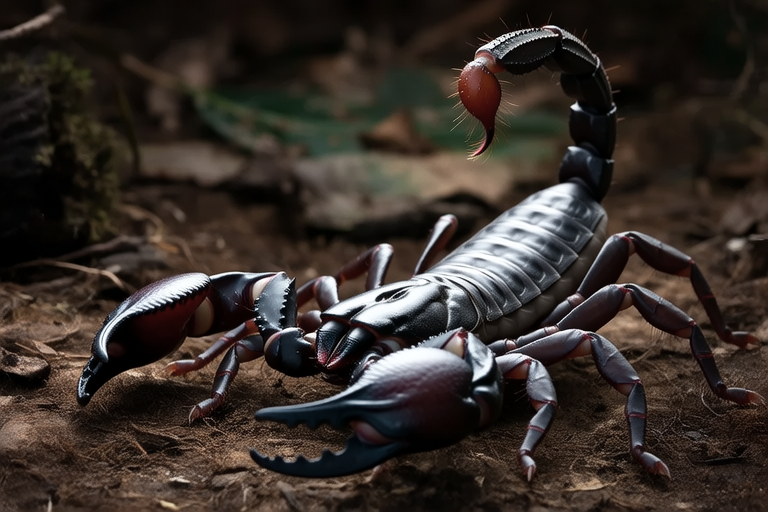
The Heterometrus Spinifer: A Nocturnal Marvel of the Scorpion World
Scorpions are fascinating creatures that have captivated human imagination for centuries. Among the numerous species, the Heterometrus spinifer stands out due to its unique physical characteristics and intriguing behavior. This article delves into the world of the Heterometrus spinifer, exploring its physical attributes, nocturnal habits, natural habitat, diet, and cultural significance. We’ll also compare it with other scorpions to highlight what makes this species special.
Physical Characteristics: The Spiny Wonder
The Heterometrus spinifer, commonly known as the Asian forest scorpion, is a medium-sized scorpion, typically ranging from 6 to 10 centimeters in length. Its most distinctive feature is the presence of prominent spines on its pedipalps (pincers) and tail. These spines are not just ornamental; they play a crucial role in defense and prey capture. The spines on the pedipalps help the scorpion grip and manipulate its prey, while those on the tail serve as a deterrent against potential threats. The coloration of the Heterometrus spinifer varies from dark brown to almost black, providing excellent camouflage in its forested habitats.
Compared to other scorpions, the Heterometrus spinifer’s spines set it apart. While many scorpions possess some form of spines, the Heterometrus spinifer’s are particularly pronounced and effective. For instance, the Emperor scorpion (Pandinus imperator), though larger and more robust, lacks the same level of spination. The spines of the Heterometrus spinifer make it an intimidating predator in its ecosystem, capable of subduing prey that might otherwise be too large or strong for smaller scorpions.
Nocturnal Behavior: The Night Stalker
The Heterometrus spinifer is primarily nocturnal, emerging from its hiding spots at dusk to hunt. This behavior is typical among scorpions, which have adapted to avoid daytime heat and predators. However, the Heterometrus spinifer takes this nocturnality to another level. It is an active hunter, moving swiftly through the underbrush and leaf litter, using its sensory structures to locate prey. Its long, segmented tail and pincers work in tandem to detect vibrations and changes in air pressure, allowing it to track down even the stealthiest of insects.
During the day, the Heterometrus spinifer retreats to cool, damp places such as burrows, crevices, or under logs. These shelters provide protection from the harsh sun and potential predators. Its nocturnal lifestyle is a testament to its adaptability and efficiency in utilizing resources in its environment. Unlike diurnal scorpions, which rely more on visual cues, the Heterometrus spinifer’s reliance on other senses ensures its survival in the twilight hours.
Natural Habitat: Forests and Beyond
The Heterometrus spinifer is native to Southeast Asia, where it thrives in the lush, humid forests of countries like Thailand, Malaysia, and Indonesia. It prefers environments rich in vegetation, where it can find ample cover and prey. These forests are teeming with life, offering the Heterometrus spinifer a diverse menu of insects, spiders, and even small vertebrates. The scorpion’s preference for these habitats is reflected in its common name, the “Asian forest scorpion.”
While the Heterometrus spinifer is primarily associated with forested areas, it has been found in various other environments, including agricultural fields and suburban gardens. In these settings, it plays a crucial role in pest control, preying on insects that might otherwise damage crops or spread disease. Its adaptability to different habitats is a key factor in its widespread distribution and success as a species.
Diet: The Carnivorous Hunter
The Heterometrus spinifer is a carnivorous predator, feeding mainly on insects, spiders, and other arthropods. Its diet is varied, depending on the availability of prey in its habitat. The scorpion uses its powerful pincers to grasp and crush its victims, injecting venom to immobilize them. Once subdued, the prey is consumed whole, often with the aid of its chelicerae (mouthparts).
Interestingly, the venom of the Heterometrus spinifer is not particularly potent compared to that of some other scorpion species. However, it is still effective in subduing its usual prey. The scorpion’s hunting strategy relies more on its agility and strength than on the toxicity of its venom. This is in contrast to species like the Deathstalker scorpion (Leiurus quinquestriatus), whose venom is highly toxic and can cause severe pain and systemic effects in humans.
Interesting Behaviors and Adaptations
The Heterometrus spinifer exhibits several fascinating behaviors and adaptations that enhance its survival in the wild. One notable adaptation is its ability to dig burrows, which provides shelter during the day and a strategic hunting ground at night. The scorpion uses its pedipalps and claws to excavate soil, creating tunnels that lead to a chamber where it can rest and hide from predators.
Another intriguing behavior is its mating dance. During courtship, male and female Heterometrus spinifer engage in a complex series of movements, with the male leading the female around in a figure-eight pattern. This behavior helps synchronize their reproductive cycles and increases the chances of successful mating. After mating, the female carries her eggs internally until they hatch, a process that can take several months. Once the young scorpions emerge, they remain on their mother’s back for a short period before venturing out on their own.
Cultural and Scientific Significance
In many cultures, scorpions, including the Heterometrus spinifer, are viewed with both fear and reverence. They are often associated with danger and mystery, reflecting their predatory nature and nocturnal habits. In some traditional practices, scorpions are believed to have medicinal properties, and their venom is sometimes used in folk remedies. However, it is important to note that these practices are not scientifically validated and can be dangerous.
From a scientific perspective, the Heterometrus spinifer is valuable for research on venom composition and evolutionary biology. Its venom contains a variety of peptides and proteins that have potential applications in medicine, including pain management and cancer treatment. Additionally, studying the scorpion’s sensory organs and locomotion can provide insights into how animals adapt to challenging environments.
Safety Tips for Encounters with Humans
While the Heterometrus spinifer is generally not aggressive toward humans, it is essential to exercise caution when encountering this scorpion. Its venom, while not deadly to healthy adults, can cause localized pain, swelling, and discomfort. Children, elderly individuals, and those with compromised immune systems may experience more severe reactions.
If you encounter a Heterometrus spinifer, it is best to leave it alone and give it space. Avoid provoking or handling the scorpion, as this can trigger a defensive response. If you are bitten, seek medical attention promptly. Clean the wound thoroughly and apply a cold compress to reduce swelling. In most cases, over-the-counter pain relievers will suffice, but more serious symptoms may require antivenom or other treatments.
Conclusion: A Fascinating Species
The Heterometrus spinifer is a remarkable species with unique physical characteristics, nocturnal behavior, and fascinating adaptations. Its spines, nocturnal hunting, and complex mating rituals make it stand out among other scorpions. Whether you encounter it in the wild or learn about it through scientific studies, the Heterometrus spinifer offers a window into the wonders of the animal kingdom. By understanding and respecting this scorpion, we can better appreciate the diversity of life on our planet and the intricate ways in which organisms have evolved to thrive in their environments.
