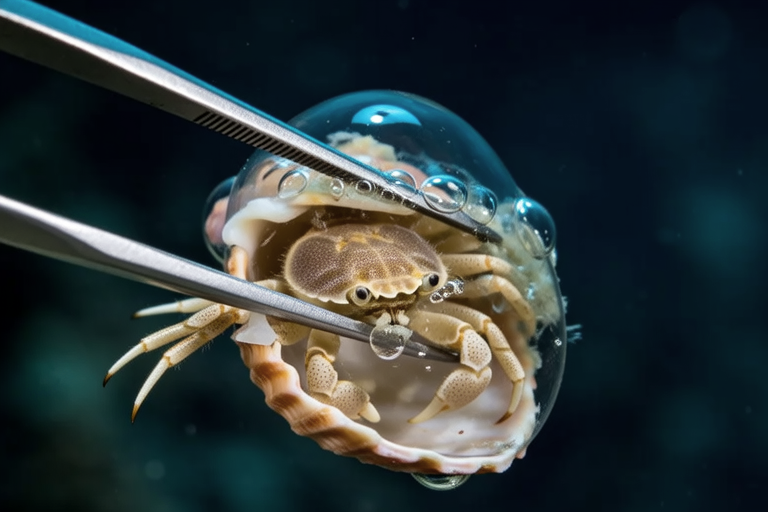
Crab in a Bubble: How Pea Crabs Survive Inside Their Host
In the vast ocean, where countless species coexist in intricate webs of life, there exists a fascinating symbiotic relationship between pea crabs and their hosts, typically bivalves like mussels or sea cucumbers. These tiny crustaceans, known as pea crabs, have adapted to live entirely within the confines of their host’s shell or body cavity. This article delves into the unique world of pea crabs, exploring their life cycle, the challenges and benefits of their symbiotic existence, and their ecological significance.
The Unique Symbiosis
Pea crabs, belonging to the family Pinnotheridae, are among the smallest true crabs, measuring only a few millimeters to a couple of centimeters in size. Their name is derived from their resemblance to peas in both shape and size. These crabs form a mutualistic relationship with their hosts, which are usually bivalve mollusks like mussels, oysters, or clams. The relationship is so intimate that the crabs spend their entire lives inside the host, protected from predators and harsh environmental conditions.
The symbiosis between pea crabs and their hosts is mutually beneficial. For the crabs, the host provides shelter, protection, and a reliable source of food. In return, the crabs consume excess nutrients, including detritus and parasites, which can otherwise harm the host. This interaction exemplifies the delicate balance of nature, where both parties benefit from the relationship.
The Life Cycle of Pea Crabs
The life cycle of pea crabs is a marvel of adaptation and survival. It begins with the release of free-swimming larvae, which are attracted to the scent of their potential hosts. Once a larva finds a suitable host, it enters through the gills or other openings. Inside the host, the larva undergoes several molts, gradually transforming into an adult crab. The transformation is marked by significant physical changes, including the development of specialized appendages that aid in movement and feeding within the confined space.
Pea crabs are highly selective about their hosts, often preferring specific species of bivalves. This specificity ensures a stable and safe environment for the crabs, reducing the risk of being rejected or expelled by the host. The host’s body cavity provides ample room for the crabs to grow and reproduce, ensuring the continuation of the species.
Adaptations for Life Inside a Host
To thrive inside their hosts, pea crabs have developed remarkable physical adaptations. Their flattened bodies allow them to fit snugly within the narrow confines of the host’s shell or body cavity. Additionally, their legs are modified for efficient movement within the limited space. These adaptations enable the crabs to navigate and find food within the host without causing damage.
One of the most striking adaptations is the crabs’ ability to manipulate the host’s behavior. By tapping on the host’s mantle, pea crabs can signal the opening and closing of the bivalve’s shell, facilitating their access to the outside world for mating or releasing larvae. This coordination between host and symbiont demonstrates the complexity of their relationship.
Benefits and Challenges of the Relationship
The symbiotic relationship between pea crabs and their hosts presents both benefits and challenges for both parties. For the crabs, the primary advantage is the protection provided by the host’s shell. This shield defends them against predators and environmental stressors, significantly increasing their chances of survival. Additionally, the constant supply of food within the host’s body cavity ensures a steady diet of nutrients.
However, the cramped living conditions pose challenges for the crabs. They must compete with other symbionts and parasites for resources within the host. Moreover, the lack of space limits their ability to move freely, making it difficult to escape threats or find new hosts. Despite these challenges, the benefits of the relationship outweigh the drawbacks, allowing pea crabs to thrive in their unique niche.
For the hosts, the presence of pea crabs can be both advantageous and disadvantageous. On one hand, the crabs help maintain the health of the host by consuming excess nutrients and parasites. On the other hand, the crabs can also consume valuable resources, potentially weakening the host if the population becomes too large. This delicate balance underscores the importance of maintaining a healthy symbiotic relationship.
Ecological Significance
The symbiotic relationship between pea crabs and their hosts plays a crucial role in marine ecosystems. By controlling parasite populations and maintaining the health of bivalves, pea crabs contribute to the overall stability of their environments. Their presence can influence the distribution and abundance of bivalves, affecting the broader ecosystem dynamics.
Beyond their direct impact on hosts, pea crabs serve as indicators of environmental health. Changes in their population or distribution can signal shifts in ecosystem conditions, providing valuable information for conservation efforts. Understanding the factors that affect pea crab populations can help researchers develop strategies to protect marine biodiversity.
Threats to Survival
Despite their successful adaptation, pea crabs face several threats to their survival. Habitat destruction, pollution, and climate change pose significant risks to their ecosystems. The loss of suitable habitats, such as mussel beds, can reduce the availability of hosts, impacting the crabs’ ability to find mates and reproduce. Additionally, pollution can introduce harmful substances into the water, affecting the health of both crabs and their hosts.
Climate change further exacerbates these challenges by altering water temperatures and acidity levels. These changes can disrupt the delicate balance of the symbiotic relationship, leading to increased stress and mortality rates for both crabs and hosts. Conservation efforts aimed at protecting marine habitats and mitigating the impacts of climate change are essential for preserving the unique and vital role that pea crabs play in marine ecosystems.
Conclusion
The story of pea crabs and their hosts is a testament to the power of symbiosis in shaping marine life. Through their intimate relationship, these tiny crustaceans have found a way to survive and thrive in challenging environments. Their adaptations and the benefits they provide highlight the intricate and interconnected nature of marine ecosystems. As we continue to explore and understand these relationships, it is crucial to recognize the importance of preserving the delicate balance that sustains life in our oceans.
